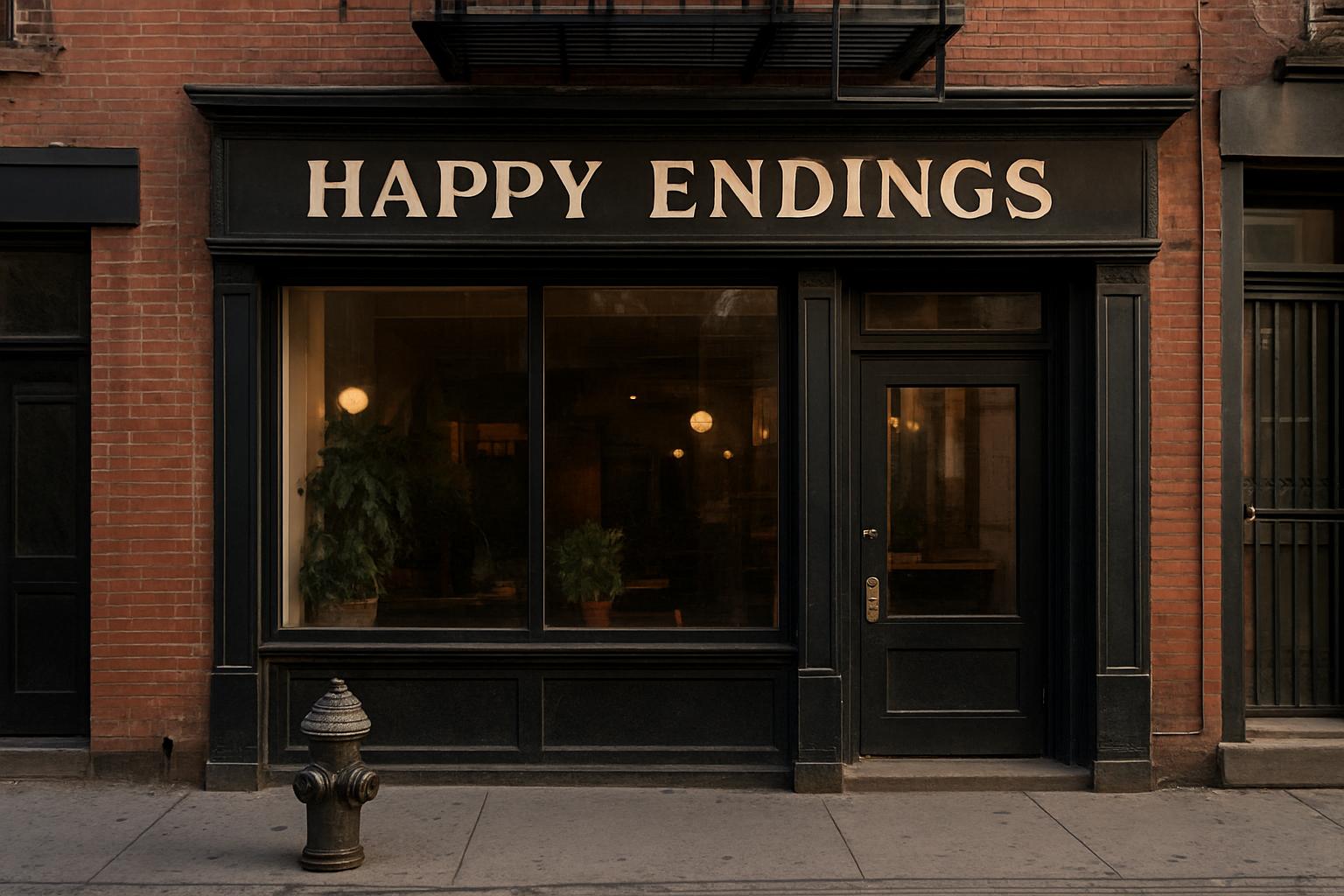

New York has a reputation for hard edges and faster paces, but it has an equal and quiet talent for delivering satisfying conclusions. Whether those finales arrive like a rendezvous on a rain-slicked street, a hush at the back of a theater when the lights come up, or the steady click of a closing chapter in a book, the city stages endings that feel earned. You can find them in films, in neighborhoods, and in the very small rituals people bring to the daily grind here.
These are not always fireworks. Often a happy ending in New York is a light turned on in the right apartment, a phone call that changes direction, or a decision made at the end of a long day. The city’s density—its overlapping commutes, cultures, and chances—means endings can arrive imperceptibly, then accumulate into something unmistakable. Here I explore how New York writes its endings and where you might go to discover one of your own.
The New York Happy Ending: More Than Romance
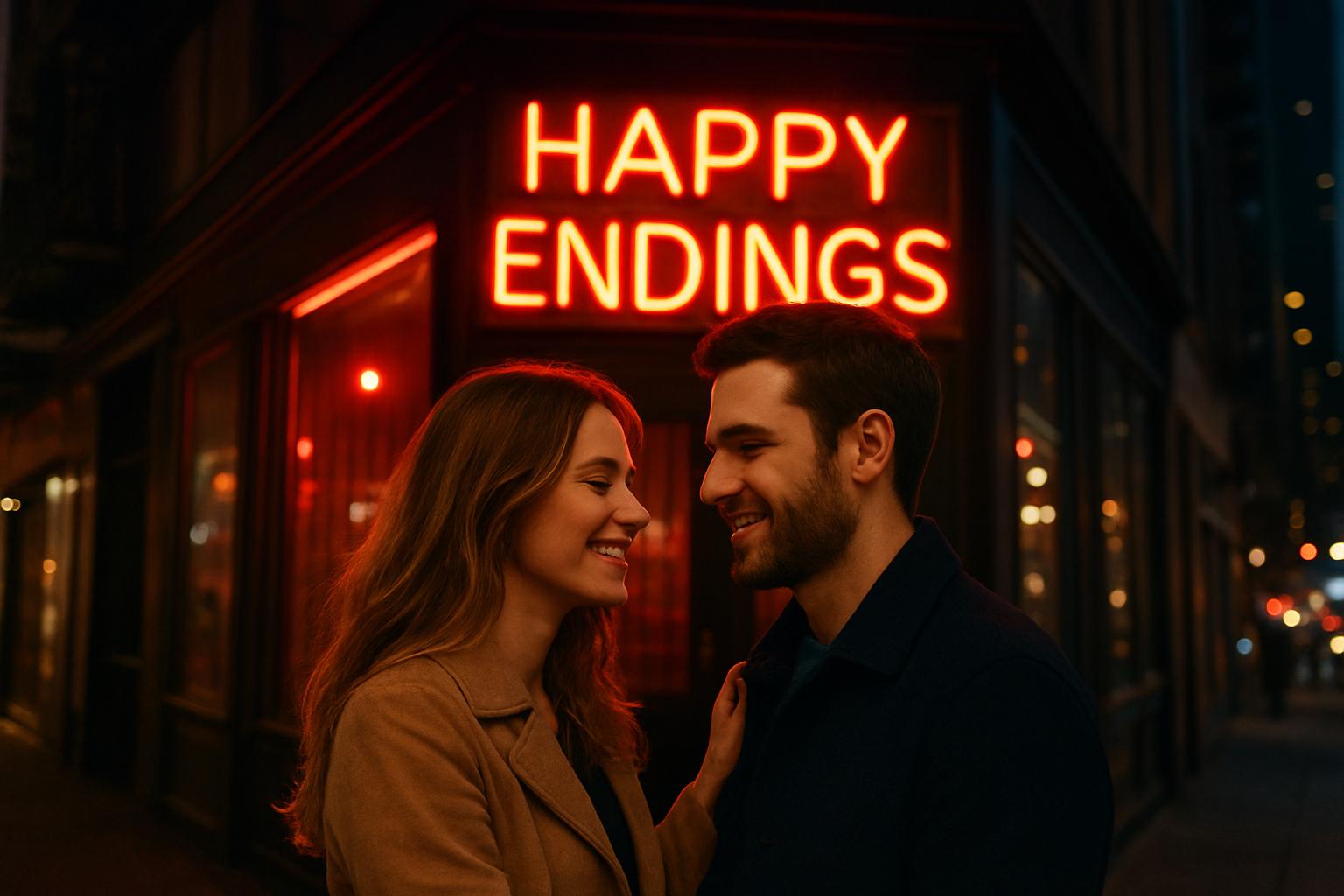
A «happy ending» in New York rarely fits one mold. Sometimes it’s the conventional beat—two people finally saying the thing they meant to say. Other times it’s professional vindication, the relief of a long-sought permit, a gallery acceptance, or the decision to leave a career that no longer fits. There are also quieter variants: reconciliation within families, the small domestic comforts that signal a life rebuilt after loss, or simply the choice to stay put and make a neighborhood your own.
Cultural products from and about New York show this range. Some romantic comedies resolve with a public declaration beneath city lights; other stories close on a character who learns to live bravely alone. Theatre and literature often favor ambiguity, leaving room for the reader or spectator to supply their own closure. In a city where chance encounters are routine, the narrative payoff can be as much about timing and presence as it is about plot mechanics.
The city’s infrastructure itself lends a shape to endings. Public spaces—the riverfronts, the parks, the great staircases into museums—offer stages where private resolutions can feel larger than they are. A decision can feel cathartic when said beneath the skyline; a reconciled friendship gains weight when celebrated at a long table in a small restaurant. New York’s particular topology gives meaning to how things end.
Where to Find Your Own Happy Ending in the City

If you want a location that helps the lights click on at the end of a chapter, the city supplies plenty of frames. Central Park is obvious: its bridges and secluded meadows have long been settings for turning points. The High Line elevates the ordinary walk into something cinematic, with art, gardens, and skyline views that make resolutions feel deliberate. Elsewhere, the Staten Island Ferry offers a free, slow-moving stage of skyline, ferry horns, and fresh air—simple, unspectacular, and oddly cinematic.
Neighborhoods matter. Brooklyn Heights Promenade gives a skyline backdrop without the crowd congestion of midtown, and the West Village still carries nooks of intimate restaurants and bars where conversations can turn serious. Museums—both the great institutions and modest galleries—provide a different tempo. Ending a night surrounded by art can help a decision land with perspective; the quiet, contemplative mood makes intentions feel thoughtful and final.
- Central Park (Bow Bridge, Bethesda Terrace) — classic outdoor settings for quiet reunions or proposals.
- The High Line — elevated vantage points with gardens and public art for reflective walk-and-talk endings.
- Staten Island Ferry — no cost, great skyline views, suited for contemplative breaks and scene-setting.
- Brooklyn Heights Promenade — an intimate skyline overlook away from the busiest tourist circuits.
- Small theaters and off-Broadway houses — endings experienced communally can feel more resonant.
Stories and Scenes: Films and Books That Teach Us About Closure
We learn how to close chapters by watching how others close theirs. New York’s presence in film and fiction gives a catalog of techniques: delayed confessions, public reconciliations, scenes of self-realization against a city backdrop. Several popular works demonstrate how setting and character choices interact to produce endings that feel right rather than simply tidy.
Below is a concise table comparing a handful of well-known New York-set works and what makes their endings satisfying. The choices focus on clarity—whether romantic, personal, or professional—and on how New York’s textures contribute to the emotional payoff.
| Title | Type | What Makes the Ending Work |
|---|---|---|
| When Harry Met Sally… | Film | A late admission of truth grounded in everyday honesty; the city’s public spaces underscore both timing and intimacy. |
| You’ve Got Mail | Film | Digital anonymity resolved into face-to-face connection; the city’s bookstores and neighborhoods act as emotional anchors. |
| Breakfast at Tiffany’s (film) | Film | Resolution through recognition and choice; the city’s glamour and grit inform the characters’ decisions. |
| The Devil Wears Prada | Film / Novel | Professional growth and personal boundary-setting create a non-romantic but deeply satisfying endpoint. |
These are touchpoints, not rules. You can mine them for how to stage your own ending: prioritize honest dialogue, let the city’s landmarks provide the mood, and allow the resolution to reflect growth rather than a sudden, unearned twist.
How the City Shapes Endings: A Practical Guide
If you want to craft a satisfying conclusion in your life—romantic, professional, or personal—use the city’s qualities as tools. New York’s density gives you options; its anonymity gives you privacy; its institutions give you ritual. Think of these as elements you can arrange to give weight and clarity to a decision.
Make the scene intentional. Choose a place that matches the tone you want: intimate and quiet for vulnerable conversations; public and visible for declarations that need witnesses; cultural for resolutions that rely on shared meaning. Pay attention to timing—New Yorkers tend to underplay grand gestures, so a well-timed, modest act can feel more authentic than an overblown spectacle. Finally, honor small rituals: finish a shared meal, walk even a few blocks together, or revisit a meaningful spot before you speak. These simple moves help both parties register the moment fully.
- Decide what kind of ending you need (reconciliation, closure, celebration) and pick a setting that supports that tone.
- Prepare, but don’t over-script. A short, honest statement often resonates more than a rehearsed speech.
- Use the city’s rhythm—leave time for the other person to respond; don’t rush the walk home that follows.
- Create a small ritual to mark the moment: a toast, a photograph, or a shared song on a phone.
- Follow up. Endings in New York are often the start of a next phase; plan a tangible next step to sustain the change.
Making Space for Different Kinds of Happy Endings
Not every satisfying finish involves someone else. New York rewards solitude and reinvention as much as coupling or career victory. A happy ending can be the moment you sign a lease on an apartment that finally feels like yours, or the afternoon you realize the city supports your independence. These endings are quieter but no less meaningful.
Community can play a role too. Block associations, creative groups, or a favorite neighborhood coffee shop become parts of the narrative. Bringing others into the fold—by celebrating milestones or sharing small rituals—turns private resolutions into collective memory. Over time, the accumulation of these small, well-placed endings creates a life that feels thoughtfully concluded at every stage.
Conclusion
New York crafts happy endings the way it builds neighborhoods: with layers, practical choices, and a willingness to let small moments accumulate into something larger; choose your scene, keep your gestures honest, and use the city’s textures—parks, ferries, theaters—to give your closure the shape it deserves.